SURFACE CLEANING / OPEN WATER
M-Cleaner
Larger capacity for open water.
A 5 m-class autonomous cleaning vessel with a 500 kg debris capacity for harbours, coastal waters within 2 km of shore, lakes and reservoirs, including algae and floating waste.
Export is subject to approval for each project. Availability for your country is confirmed on enquiry.
Get a configuration & quote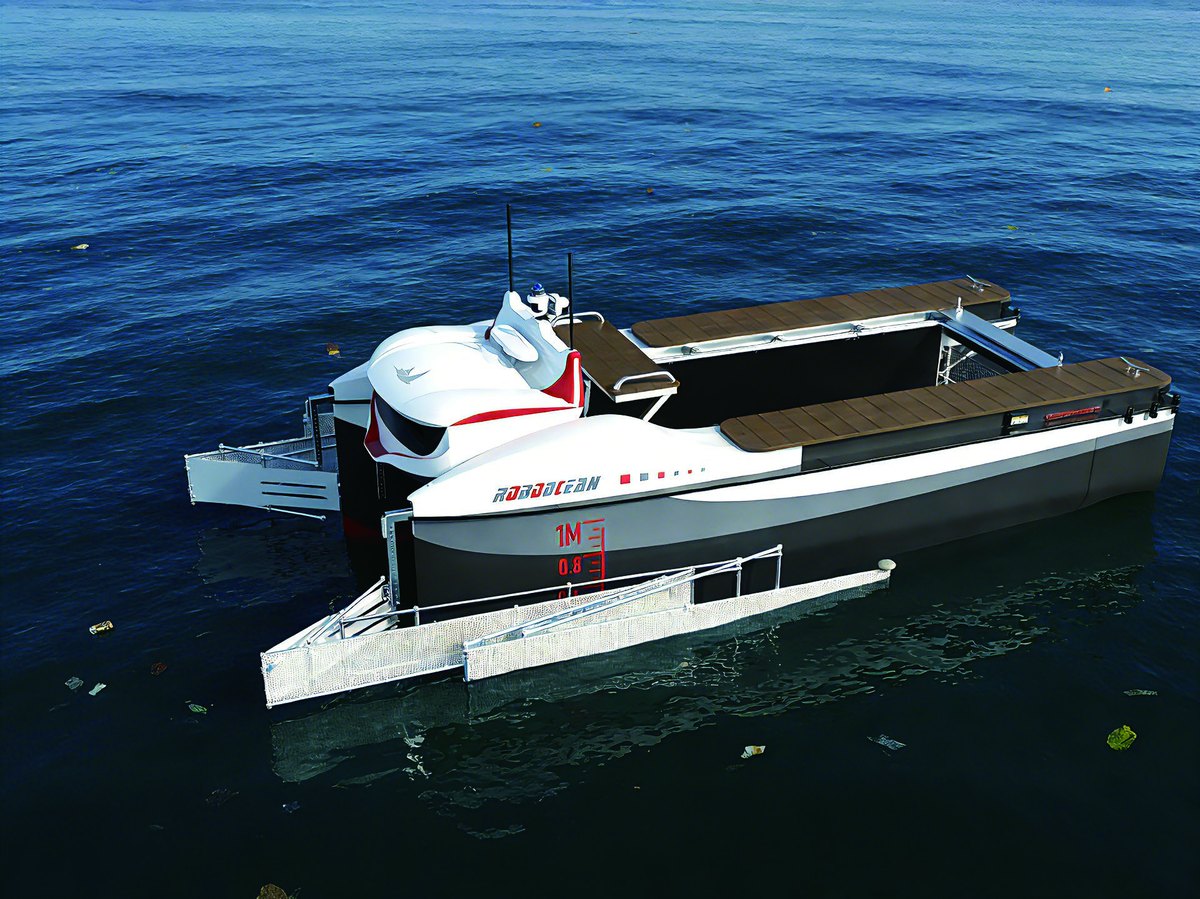 Manufacturer brochure illustration, not a project photograph.
TECHNICAL STARTING POINT
Key specifications.
- Draught
- ≤ 80 cm
- Minimum water depth
- 1 m
- Dimensions
- ≤ 5 m long, ≤ 2.5 m wide
- Debris capacity
- ≥ 500 kg
- Rated coverage
- ≥ 26,700 m²/h
- Speed (bare hull)
- Max 3 m/s; economy 1.5 m/s
- Endurance
- ≥ 8 h per run
- Charging
- ≤ 6 h; automatic or manual
Tasks to assess
- Open harbours and coastal water within about 2 km of shore
- Lakes and reservoirs with recurring algal blooms or heavy floating waste
- Sites that want one vessel to carry monitoring or survey modules as well
Configuration checks
- Check the vessel’s size and weight against launch, mooring, charging and unloading facilities.
- Check the manufacturer wind and wave rating (wind force 4, wave grade 3) and its test conditions against your site.
- For oil collection, confirm separately whether the configuration meets local spill-response requirements.
COMPLETE SYSTEM
Specify more than
the vehicle.
The manufacturer describes automatic charging and full-load detection, and optional modules for water-quality and hydrological measurement, bathymetry and reservoir-capacity surveys, security patrol and water rescue. Confirm which modules are available for the supplied version. Oil-film collection is a manufacturer-described capability, not a certification as oil-spill response equipment. Figures follow the manufacturer’s 2026 product introduction, which supersedes the earlier brochure.
Confirm in the delivered scope
- Vessel, collection or payload equipment and mooring points
- Control terminal, software and remote link
- Batteries, charger and docking station if selected
- Optional sensors and data platform
- Transport, spares, manuals and operator training
Standard, optional and custom items must be listed separately in the quotation.
OPERATING CONDITIONS
Confirm you can
run it locally.
Unmanned surface vessels depend on more than their specifications. These items are confirmed for each project and market; the IMO’s autonomous-ship code does not amount to a navigation permit for small unmanned vessels.
Before purchase
- Export approval for the specific project and destination
- Permission to operate unmanned vessels on the target waters
- Radio certification for the delivered radios and remote link (for example CE RED, FCC, ISED)
- Lithium battery test reports and dangerous-goods shipping arrangements
- A supervision and manual-takeover plan, with suitable insurance
- Offline operation, local data storage and raw-data export
QUESTIONS
Before you specify the M-Cleaner.
Can it collect oil and algae?
The manufacturer describes identification and collection of algal blooms, oil films, plastics and leaves. Oil-spill response equipment is regulated in many jurisdictions, so suitability for spill response must be confirmed against local requirements.
Where has it been used?
The manufacturer reports floating-debris collection in the coastal waters of Yazhou Bay, Sanya, China. No quantified results are published for that project.
PROCUREMENT
Prepare the next review.
Agree the site conditions, acceptance test, delivery scope and support responsibilities. Product names and rated figures alone are not a project specification.
M-Cleaner starting brief
Download a concise summary of the specifications and project questions shown here. This is a selection aid, not a factory-approved datasheet.
Download product briefFROM TASK TO CONFIGURATION
Bring your project into focus.
Share the task, site conditions and required results. Build a clear brief for system selection.