UNMANNED TRANSPORT / 15 M
USTL15
Carry equipment and supplies offshore without a crew.
A 15 m unmanned transport vessel with at least 1,000 kg payload for offshore supply runs, equipment sea trials and area patrols.
Export is subject to approval for each project. Availability for your country is confirmed on enquiry.
Get a configuration & quote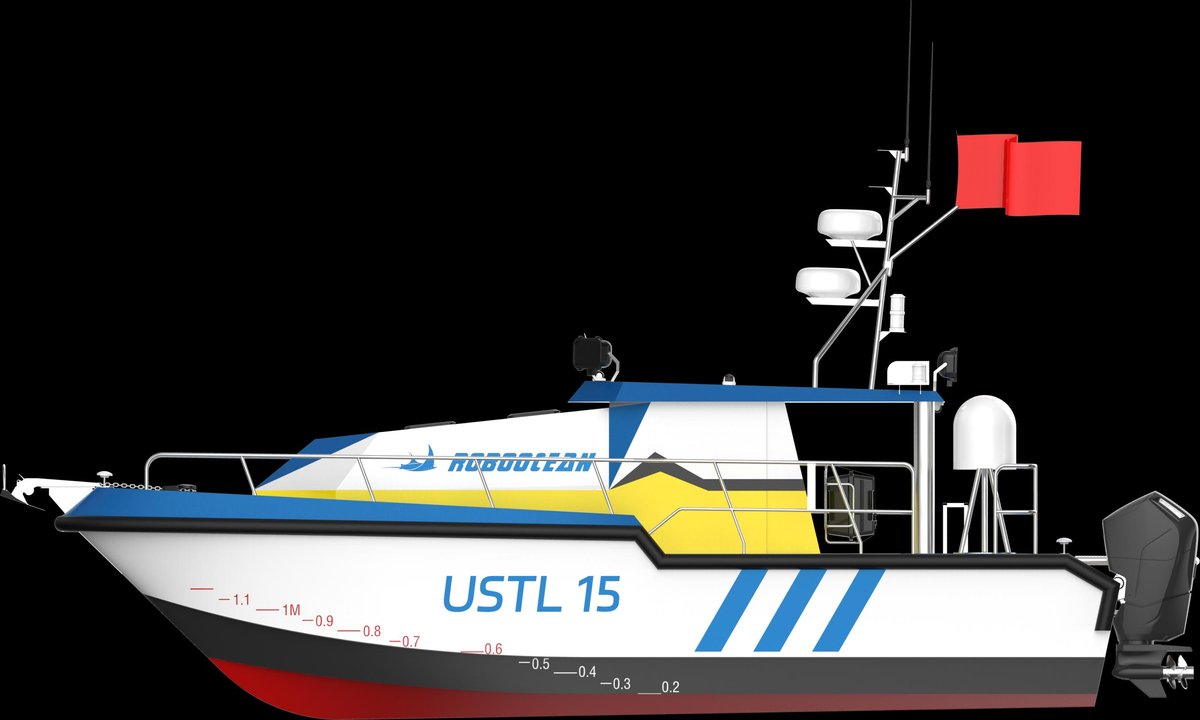 Manufacturer product rendering · Boya Gongdao
TECHNICAL STARTING POINT
Key specifications.
- Length
- 15 m
- Working speed
- ≥ 4 m/s
- Maximum speed
- ≥ 6 m/s
- Maximum payload
- ≥ 1,000 kg
- Range
- ≥ 90 km
- Payload mounting
- Side, stern, stern-lifted or towed
- Instrument interfaces
- Sonar, multibeam, weather, salinity, radar
- Role
- Supply, sea trials, patrol
Tasks to assess
- Transfer of equipment and supplies to offshore sites
- Sea trials of new instruments and vehicles
- Routine patrol of coastal work areas
Configuration checks
- Define the cargo or instrument load, mounting method and handling at both ends.
- Confirm range and speed with the planned load and sea conditions.
- Plan supervision, collision avoidance and local maritime approval for unmanned transit.
COMPLETE SYSTEM
Specify more than
the vehicle.
The manufacturer describes a lightweight composite hull, modular architecture, intelligent energy management, autonomous navigation and obstacle avoidance. Figures follow the 2026 product introduction; earlier brochure entries with conflicting wave ratings are not used.
Confirm in the delivered scope
- Vessel, payload equipment and mooring or lifting points
- Control station, software and communication links
- Power system, charging or fuelling arrangement
- Optional sensors and data platform
- Transport, spares, manuals and operator training
Standard, optional and custom items must be listed separately in the quotation.
OPERATING CONDITIONS
Confirm you can
run it locally.
Unmanned surface vessels depend on more than their specifications. These items are confirmed for each project and market; the IMO’s autonomous-ship code does not amount to a navigation permit for small unmanned vessels.
Before purchase
- Export approval for the specific project and destination
- Permission to operate unmanned vessels on the target waters
- Radio certification for the delivered radios and remote link (for example CE RED, FCC, ISED)
- Lithium battery test reports and dangerous-goods shipping arrangements
- A supervision and manual-takeover plan, with suitable insurance
- Offline operation, local data storage and raw-data export
QUESTIONS
Before you specify the USTL15.
What can it carry?
At least 1,000 kg, mounted on the side or stern, lifted at the stern or towed. Instruments such as sonar, multibeam, weather and salinity sensors and radar can be fitted.
Is unmanned transport allowed?
Rules for unmanned transit differ by country and waterway. The IMO autonomous-ship code mainly addresses large cargo ships, so approval for a small unmanned vessel is confirmed locally for each project.
PROCUREMENT
Prepare the next review.
Agree the site conditions, acceptance test, delivery scope and support responsibilities. Product names and rated figures alone are not a project specification.
USTL15 starting brief
Download a concise summary of the specifications and project questions shown here. This is a selection aid, not a factory-approved datasheet.
Download product briefFROM TASK TO CONFIGURATION
Bring your project into focus.
Share the task, site conditions and required results. Build a clear brief for system selection.